AI Agent Payment Solutions in 2026, Compared

AI agents are no longer just answering questions—they’re spending money. Tools like OpenClaw are booking flights, purchasing domains, paying for API access, and buying groceries, all without human intervention at checkout. However, the challenge AI builders are facing is how to give them spending power safely.
Agentic payments—transactions initiated by AI agents acting autonomously on a user’s behalf—are one of the fastest-growing areas in fintech. In just the past week, Coinbase launched Agentic Wallets, Stripe introduced machine payments using USDC stablecoins, and Visa, PayPal, and Mastercard all announced or expanded their own agentic commerce initiatives. The infrastructure for AI-driven spending is being built in real time.
However, most of these solutions are designed for developers, enterprises, or crypto-native users. If you’re a regular person who wants to let your AI agent make everyday purchases, or just keep your API costs from spiraling, your options may look different.
This guide compares the major payment solutions available for AI agents in 2026 and helps you choose the right one based on your use case.

What Are Agentic Payments and Why Do They Matter?
Agentic payments refer to any transaction where an AI agent initiates and completes a purchase on behalf of a human user, without that person manually entering payment details or clicking "buy." The agent handles the entire checkout flow autonomously.
People are already using AI agents to:
- Pay for API access and compute resources (OpenAI, Anthropic, cloud services)
- Purchase physical goods through browser automation (groceries, office supplies, gifts)
- Book travel, reserve hotels, and register domain names
- Manage recurring subscriptions and software licenses
- Execute on-chain transactions in DeFi protocols
The challenge is that traditional payment systems were designed for humans. Credit cards require manual entry, CAPTCHAs block bots, 3D Secure authentication assumes a person is present, and most fraud detection systems flag automated purchasing as suspicious activity. AI agents need payment rails that work at machine speed, within defined guardrails.
That’s what the new wave of AI agent payment solutions is trying to solve—though each takes a very different approach.
What Are the Different Ways to Pay AI Agents in 2026?
The current landscape can be split into two broad categories: crypto-native solutions that operate on-chain using stablecoins and blockchain protocols, and card-based solutions that work within the existing payment infrastructure you already use. Which one is right depends entirely on what your AI agent is doing.

Crypto-Native Solutions: On-Chain Wallets and Stablecoin Payments
Coinbase Agentic Wallets
Coinbase launched Agentic Wallets on February 11, 2026—the first wallet infrastructure built specifically for AI agents. It allows agents to hold funds, send payments, trade tokens, earn yield, and transact on-chain without human approval at each step.
Agentic Wallets are built on the x402 protocol, an open payment standard that embeds stablecoin payments directly into HTTP requests. The protocol has already processed over 50 million transactions. Coinbase stores private keys in trusted execution environments, meaning the AI agent never directly accesses the wallet’s private key—reducing the risk of a compromised agent draining funds.
Key features include programmable spending caps per session, individual transaction size limits, and a command-line interface for monitoring agent activity.
Best for: Crypto-native users, DeFi operations, on-chain transactions, and developers building autonomous agent workflows that transact on blockchain networks like Base, Ethereum, or Solana.
Stripe Machine Payments
Also launched on February 11, Stripe introduced a preview of machine payments—a way for developers to directly charge AI agents using USDC stablecoins on the Base network through the x402 protocol. The system is built on Stripe’s existing PaymentIntents API, so businesses can accept agent payments with a few lines of code.
Stripe’s approach is merchant-focused: it lets businesses charge AI agents for API usage, compute resources, data access, and MCP (Model Context Protocol) calls. Sales tax, refunds, and reporting integrate automatically into Stripe’s existing tooling.
Best for: Developers and businesses that want to charge AI agents for services. This is infrastructure for merchants accepting machine payments, not a consumer tool for giving your personal AI agent a credit card.
Visa, PayPal, and Mastercard: Enterprise Agentic Commerce
The major payment networks are also racing into this space, though their solutions are more enterprise-focused and most are still in early rollout:
- Visa Intelligent Commerce is working with over 100 partners and has completed hundreds of agent-initiated transactions in controlled environments. Visa predicts millions of consumers will use AI agents to complete purchases by the 2026 holiday season.
- PayPal Agent Ready enables existing PayPal merchants to accept payments from AI agents, with integration into ChatGPT for in-conversation checkout.
- Mastercard Agent Pay uses tokenization and fraud detection to authenticate agent-initiated transactions, requiring AI agents to be registered and verified before they can transact.
Best for: Enterprise merchants and platforms preparing for the broader shift to AI-driven commerce. These aren’t tools you’d hand to OpenClaw today—they’re infrastructure being built for the next wave of automated shopping.
What If Your AI Agent Needs to Make Everyday Purchases?
The solutions above are powerful, but they’re primarily designed for on-chain transactions, developer infrastructure, or enterprise merchants. If your AI agent needs to buy something at a regular online store—or if you just need to cap your monthly API spend—you need something that works everywhere credit cards are accepted, without requiring any merchant integration or crypto setup.
That’s where virtual cards come in.
Privacy Virtual Cards
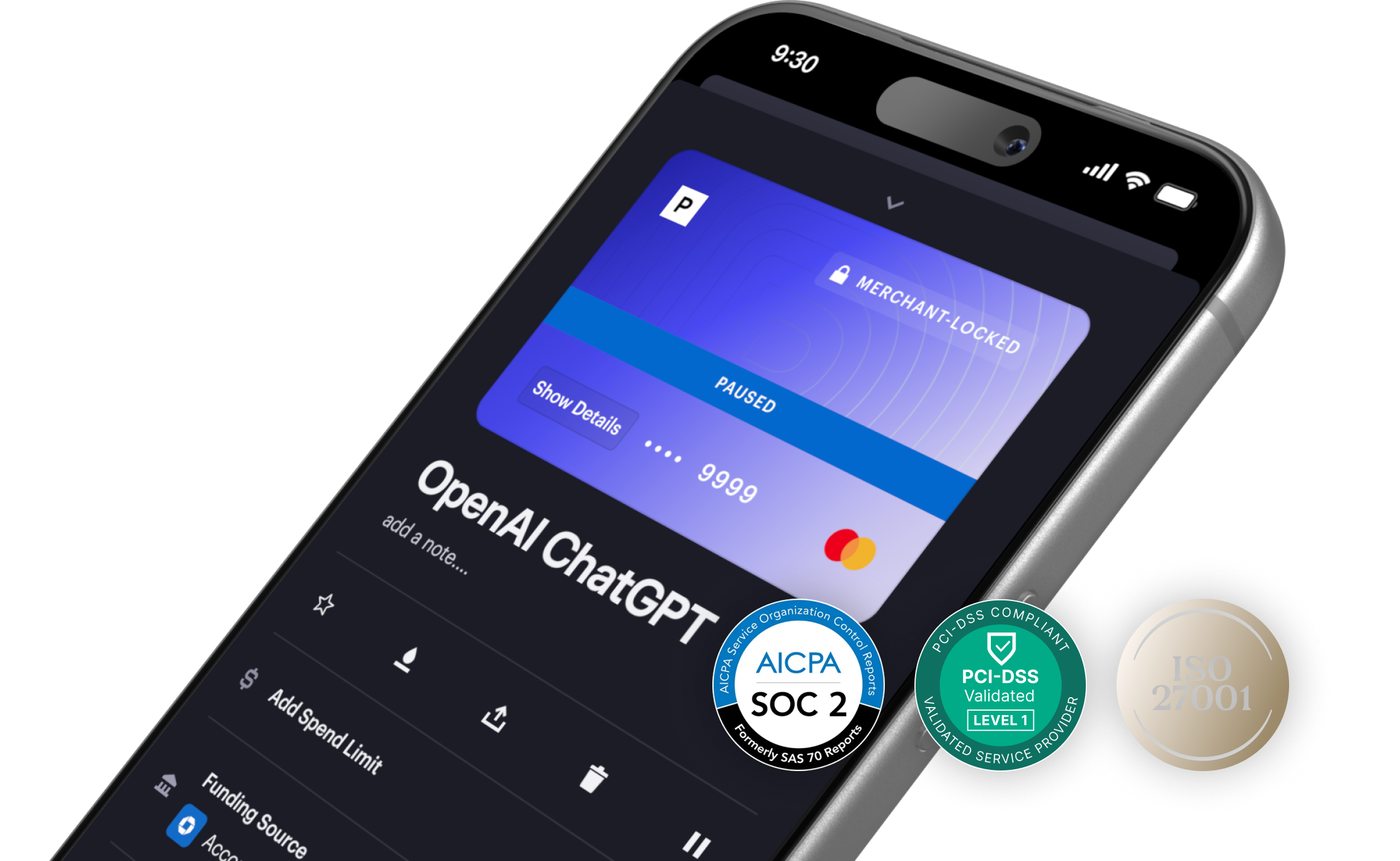
Privacy Cards are virtual cards with built-in spending controls that work at the card authorization level—meaning the guardrails are enforced before a transaction is approved, not after. You generate a card with a unique number, set your rules, and give it to your AI agent. The agent can spend within your limits, while you maintain full visibility and control. That kind of card-level control is exactly what AI agent spending and agentic payments require.
Key controls for AI agent use cases:
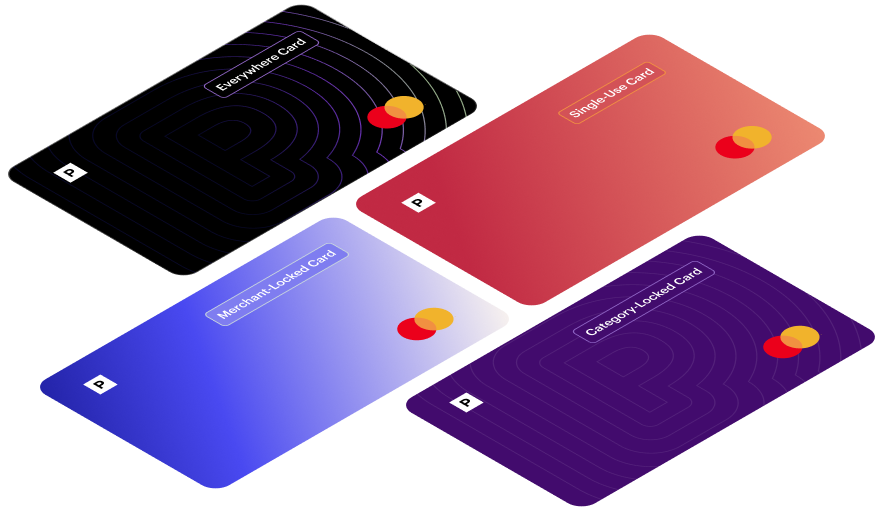
- Spending limits: Multiple OpenClaw users have reported unexpected API costs from misconfigured tasks. With Privacy, you set a hard spending cap and any transaction that exceeds your limit is automatically declined. You can set daily, monthly, or annual limits, giving you control over both AI purchases and ongoing API billing.
- Merchant-Locked cards: Lock a card to a specific merchant, like Anthropic or OpenAI, so your agent can only spend at approved vendors.
- Single-Use cards: Generate a card that closes automatically after one transaction. This card type is ideal for one-time purchases or sketchy merchants where you don’t want any risk of repeat charges.
- Category-Locked Cards: Restrict spending to specific merchant categories like travel, so your agent can book a flight up to your pre-set spend limit, but can’t buy random items.
- Pause and close cards instantly: If you want to temporarily restrict spending, pause a card with one tap from the desktop site or mobile app. Close it permanently when you’re done.
For a detailed walkthrough of how to set up Privacy Cards for OpenClaw specifically, see our guide: How to Safely Give OpenClaw (or Any AI Agent) Spending Power With Virtual Cards
Best for: Anyone who wants to give an AI agent spending power for everyday purchases, API billing, or subscriptions—without exposing their real card number or bank account. Privacy Cards work like your regular credit or debit card and are accepted at most merchants.
Coming soon: Privacy is also building stablecoin-funded cards, which will let users fund their virtual cards with USDC. This means the same spending controls that define Privacy Cards today will soon work for users who prefer to fund with stablecoins—bridging the gap between crypto-native and traditional payment rails.
How Do You Choose the Right Payment Solution for Your AI Agent?
The right solution depends on what your agent is doing. Here’s a quick comparison:
These solutions aren’t mutually exclusive. For example, a developer might use Coinbase Agentic Wallets for on-chain operations, Stripe to monetize their own AI services, and Privacy Cards to manage their personal OpenClaw spending—all at the same time.
Frequently Asked Questions
What are agentic payments?
Agentic payments are transactions initiated and completed by AI agents on behalf of a human user, without manual input at checkout. The agent handles the full payment flow autonomously, from selecting a product to submitting payment credentials.
Can AI agents use regular credit cards?
Technically yes, but it’s risky. Giving an AI agent your real credit card number means it’s stored in the agent’s configuration files, with no built-in spending controls. If the agent makes a mistake, gets exploited, or enters a processing loop, there’s no automatic safeguard. Virtual cards with spending limits are a safer alternative.
What’s the difference between Coinbase Agentic Wallets and Privacy Cards?
They serve different use cases. Coinbase Agentic Wallets are designed for on-chain crypto transactions—DeFi, token trading, and blockchain-native payments. Privacy Cards are virtual cards that work at most merchants that accept traditional credit cards, with spending controls designed for everyday purchases and API billing. If your agent transacts on-chain, Coinbase is built for that. If your agent buys things at regular online stores, Privacy is designed for that.
Is it safe to let AI agents spend money autonomously?
It can be, with the right guardrails. The key is never giving an agent unlimited access to your financial accounts. Use tools with built-in spending limits, monitor transactions in real time, and choose payment methods that let you pause or revoke access instantly. For a deeper look at the risks, see our OpenClaw guide to safe payments.